 Русский
 English
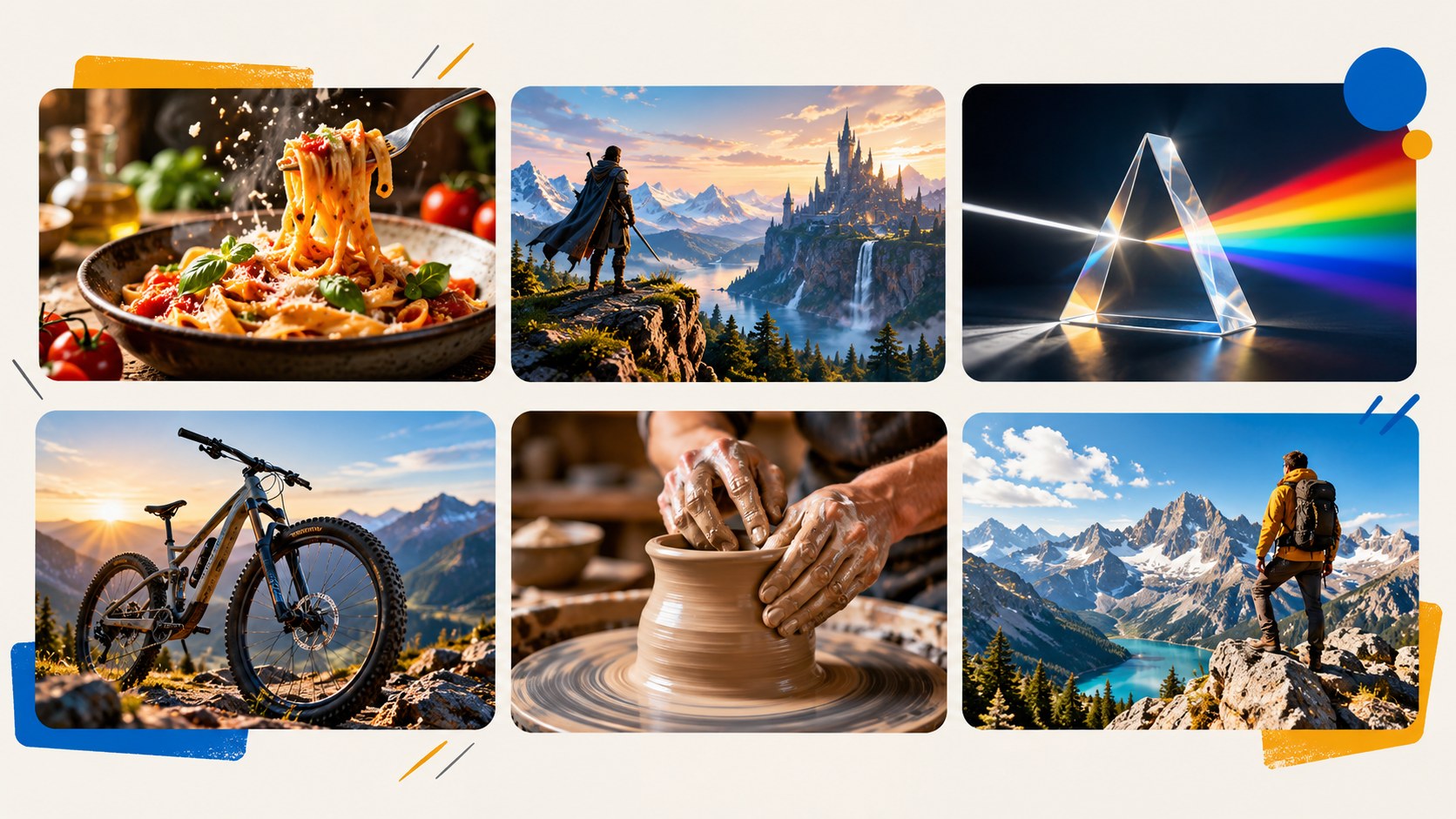
A cooking thumbnail and a finance thumbnail do not need the same visual language. Viewers use familiar cues to recognize a topic and judge whether it fits what they want. The task is to make your video understandable within its niche while giving this particular episode a distinct reason to watch.
The examples below are editorial starting points, not research proving that every audience prefers one design. All sample titles and captions are invented. Validate an approach against your own videos, audience and traffic sources.
Why niches develop different visual conventions
Repeated exposure teaches viewers what a type of video tends to look like. The scale of a product, a face, a finished dish or a recognizable interface can communicate a category before the title is read. A thumbnail that removes every familiar cue may look fresh yet fail to register as relevant.
Discovery context matters too. A how-to video may attract people actively searching for a task; a personal story may need to create interest while they browse. These are tendencies to investigate, not fixed rules about how every tutorial or vlog is distributed.
YouTube’s thumbnail guidance notes that styles and tastes change and that familiar details can work differently for existing subscribers and new viewers. Study the audience you want to reach, rather than copying the most dramatic design you can find.
Choose the main subject first
| Main subject | Common applications | What should be clear |
|---|---|---|
| Person | Vlogs, interviews, reactions and opinions | Who matters and what tone or position they convey |
| Object | Reviews, cars, equipment and unboxings | Which item is being discussed |
| Outcome | Tutorials, DIY, recipes and practical skills | What the viewer can learn or see achieved |
| Place | Travel, relocation and property | Where the story happens and what makes it specific |
| Figure or fact | Finance, business, news and analysis | Which result or question is being examined |
| Moment | Gaming, sport and narrative videos | What is happening and why it matters |
A thumbnail can contain more than one of these, but one should lead. A reviewer may appear beside the product without making the product too small to recognize. A cook may share the frame with a dish while keeping the food central.

Thumbnail ideas for specific niches
Gaming
Playthroughs, challenges, guides and esports need different emphasis. Entertainment can focus on a decisive situation or reaction; a guide often benefits from showing the item, build or completed objective the viewer wants.
Example: “I finished the hardest campaign without dying” with “0 DEATHS.” A raw screenshot may contain too much interface detail to communicate the challenge. Enlarge the important character or moment without fabricating gameplay that never occurred.
Tutorials and education
For software, editing, language learning or equipment setup, the result often provides the clearest focal point. Show a completed report, a repaired error or a visible before-and-after outcome.
Example: “Pivot tables from scratch: build a useful report in ten minutes” with “REPORT READY.” A program logo and “LESSON 5” may identify a course but give a new viewer little information about the specific skill. Use enough interface context to make the task recognizable without shrinking an entire screen into illegibility.
Technology reviews and unboxings
The exact product usually needs to be recognizable. A short verdict, constraint or point of failure can add a reason to watch. The creator’s expression is useful only if it supports the review rather than overpowering the item.
Example: “A year with a budget electric scooter: what broke first” with “THIS FAILED.” Photographing the scooter, box, charger and accessories at equal size can obscure the story. Focus on the actual component discussed and keep the claim consistent with the footage.
Finance, investing and business
A figure, comparison or concrete document can make a complex topic approachable. Avoid visual promises of effortless wealth when the video is a careful explanation. The tone should match the evidence and qualifications in the content.
Example: “Rent or buy? Comparing ten years of costs” with “BOTH CALCULATED.” This is an illustration of packaging, not financial advice. A simplified comparison can be more informative than generic cash piles and an upward arrow, especially when the video examines tradeoffs.
Vlogs, travel and relocation
A particular situation gives a landscape context. The creator can add a personal perspective through an activity, purchase or reaction, but the place should still be recognizable where it is central to the story.
Example: “Six months in Belgrade: the costs and daily frustrations” with “THE HARD PART.” A generic skyline could belong to almost any travel roundup. A real everyday detail can distinguish a lived-experience video from a destination montage.
Cooking
The finished food often deserves most of the frame. Texture, a cut surface or a clear shape can communicate what a distant plate cannot. Copy can explain a constraint invisible in the photo: no eggs, a different cooking method or a small ingredient list.
Example: “Adjarian khachapuri in a home oven” with “HOME OVEN.” Dim lighting and a distant kitchen scene can hide the dish. Improve the actual food photograph rather than generating a result the recipe does not produce.
Cars and automotive repair
Use the actual vehicle and the detail that makes the episode useful: corrosion, an inspection finding or a specific component. Enthusiast audiences may notice differences in model years, trim and equipment.
Example: “We inspected a supposedly perfect used car” with “PERFECT?” A generic photo of another car can undermine the point of an inspection. A clear reference photo is valuable if AI assists with the layout.
DIY, renovation and home projects
The outcome or a meaningful before-and-after comparison can explain why the work matters. Capture the “before” image from a viewpoint you can reproduce later, so the difference is understandable rather than a puzzle.
Example: “Building a small deck ourselves: materials and costs” with “TWO WEEKENDS,” only if that timeframe is accurate. Tools and dusty hands may show effort but fail to reveal the project. Never invent a more damaged starting condition to exaggerate the transformation.
Fitness and sport
A recognizable exercise, a real event or a relevant moment can carry the concept. Instructional content may use a comparison of form; a personal account might show the first race or a difficult training milestone.
Example: “My first half marathon after a year of training” with “STARTED FROM ZERO.” Avoid presenting one person’s result as a guaranteed outcome for everyone. Generated body changes or exaggerated transformations can turn a story into a misleading promise.
Fishing and practical hobbies
The result and the tool used to achieve it often provide useful specificity: the catch beside the lure, a finished model beside the kit, or a harvest from a particular bed. Experienced viewers care about concrete details.
Example: “Ice fishing on a small lake: what the perch actually took” with “ONLY THIS LURE.” A wide landscape or crowded workshop may establish atmosphere but hide the reason to watch. Use the actual result and equipment.
Interviews and podcasts
The guest’s identity and one particular idea can distinguish the episode. A short quotation needs to be something the guest actually said; a paraphrase should not be presented as an exact quote.
Example: a fictional interview about investigating fraud, with an accurately sourced line about why victims hesitate to report it. Two small people, a generic studio and a large logo communicate “podcast” without explaining this conversation. Keep the series recognizable while changing the episode-specific promise.
Documentaries, investigations and history
A place, object, document or relevant person can create interest without shock imagery. An understated visual may better match a careful investigation than a sensational expression.
Example: “The housing project that existed only on paper” with “NO BUILDING.” Use authentic evidence where possible and distinguish reconstruction from documentation. YouTube’s thumbnail policy restricts shocking violent imagery as well as misleading images.
Borrow a technique from another niche
General visual ideas can transfer well when their tone is adapted. Before-and-after comparisons from renovation can explain photo editing or a spreadsheet cleanup. A receipt can make a cooking or DIY budget concrete. A concise first-person remark can turn an abstract product verdict into a personal experience. A route or relationship diagram can clarify an investigation.
Keep the technique, then rebuild the execution around your video. A restrained budget analysis can use a receipt without adopting the mood of a beach-holiday vlog. Check the new image among actual neighboring videos: it should feel distinct while remaining recognizable as the right subject.
What if the channel covers several topics?
Separate channel recognition from episode meaning. A typeface, restrained color cue or familiar face can stay consistent. The main subject should change with the topic.
For example, a cooking creator filming a market visit can retain the usual caption treatment while making the market and its activity central. A close-up recipe plate would misrepresent the episode’s purpose. The audience needs both “this is the creator I know” and “this is what this upload offers.”
Research your own niche
Look at several topics you genuinely cover and note the recurring subjects, expressions, palettes and caption styles. Compare ordinary videos with stronger performers, while remembering that public views cannot reveal the effect of a thumbnail alone.
A brief comprehension check with a relevant viewer can reveal confusion; an actual experiment is needed to investigate performance.
Use specific references when generating a thumbnail
The Bloggers.tools generator uses subtitles as context and supports photo and object references. Provide the actual car, guest or product where accuracy matters. Choose a style appropriate to the episode, then inspect the result rather than assuming the input guarantees a match. A vertical version is a separate generation.
Frequently asked questions
How is a niche convention different from another channel’s branding?
A convention is a shared way of communicating a topic, such as a close-up product or a before-and-after scene. Specific assets and a distinctive combined treatment may identify one creator. Adapt the general idea without creating a misleading resemblance.
What if I do not show my face?
A product, outcome, place, fact or moment can be the focal subject.
Does a shocked expression work in every niche?
No universal expression works for every audience. Match the emotion to the video. Exaggerated surprise can set the wrong expectation for a calm lesson or careful analysis.
How should a general-interest channel choose a style?
Decide what the specific video needs to communicate and which neighboring videos viewers may compare it with. Preserve a few channel cues, but let the episode’s subject lead.