


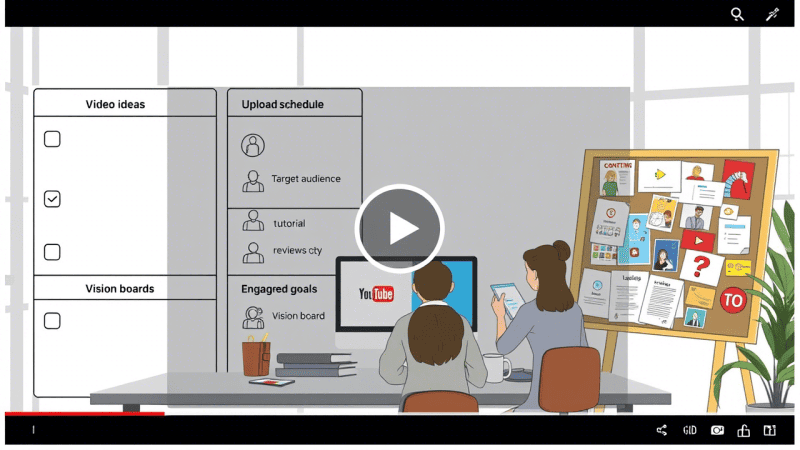
Publishing YouTube videos chaotically? Investing energy in filming without seeing meaningful results in views and subscriptions? Months slip by unnoticed while your content plan remains an elusive goal. Without a strategic framework, you risk losing audience engagement and missing growth opportunities. Planning is the pathway to systematic efficiency and scalable success.
This comprehensive guide will demonstrate how to build an effective content strategy for monthly execution: from audience analysis to publication scheduling. We'll examine critical phases including analytics review, idea generation, format planning, and performance optimization.
Strategic Analysis and Goal Setting
Before constructing actionable plans, conduct an honest assessment of your current performance metrics. Begin with comprehensive analytics deep-dive through YouTube Studio, focusing on data-driven insights that inform strategic decisions.
Critical Performance Metrics for Analysis:
Traffic Source Analysis. Identify primary viewer acquisition channels and amplify high-performing pathways.
Audience Retention Patterns. Pinpoint viewer drop-off points. Low retention at video start indicates weak hook implementation, while mid-video drops suggest content engagement issues.
Top-Performing Content. Analyze which topics and formats generate maximum viewership and engagement metrics.
Audience Demographics. Understand your viewer base thoroughly. Deep comprehension of their challenges and interests forms the foundation of relevant content development.
Simultaneously, execute competitive intelligence by analyzing the top 5 channels within your niche. Focus on strategic elements of their approach: frequently covered topics, most successful video formats, and title-thumbnail optimization techniques for click-through enhancement.
Identify their strategic weaknesses—potentially superficial topic coverage, substandard audio quality, limited audience interaction, or ineffective call-to-action implementation. These gaps represent direct opportunities to deliver superior value and differentiate from competitors.
SMART Goal Framework Implementation
Based on analytical findings, establish SMART objectives for monthly execution:
Specific. Replace vague targets like "more views" with precise metrics: "+15% views from recommendation traffic."
Measurable. Utilize quantifiable benchmarks: +10% subscriber growth, 8% CTR achievement.
Achievable. Consider available resources, time allocation, and budget constraints.
Relevant. Ensure objectives directly contribute to channel growth acceleration.
Time-bound. Establish clear 30-day completion deadlines.
This framework prevents scattered efforts and channels resources toward measurable channel expansion.

Idea Generation and Topic Selection
Consistent flow of relevant topics drives sustainable success. Implement systematic idea collection rather than relying on spontaneous inspiration. Primary sources include:
Audience Intelligence. Monitor comments across your content and competitor channels, social media inquiries, and polling through Stories or Shorts features.
Trend Monitoring. Track YouTube Trends, Google Trends, and niche-specific news developments.
Evergreen Content Opportunities. Focus on fundamental topics with consistent relevance for your target audience.
Search Query Analysis. Examine YouTube Search suggestions and keyword research tools like Google Keyword Planner or Yandex Wordstat.
Historical Performance Mining. Develop successful past content through continuations, deeper exploration, or alternative perspectives.
Topic Selection Criteria
After compiling potential ideas, apply rigorous selection standards: monthly goal relevance, target audience interest alignment, reach and retention potential, and expertise match assessment. Develop a final roster of 5-8 strong topics to ensure flexibility while maintaining quality focus.
Format Planning and Calendar Development
Determine optimal presentation methods for selected topics. Video format should amplify core ideas and advance strategic objectives. Avoid single-format dependency—format diversity maintains audience engagement. Most effective options include:
Long-form Content (10+ minutes). Comprehensive guides, detailed reviews, and in-depth analysis. Excellent for retention optimization and expert positioning.
Shorts (up to 60 seconds). Viral trends, actionable tips, and content previews. Rapid new audience acquisition and Shorts feed traffic generation.
Live Streaming. Real-time interaction, Q&A sessions, and topic discussions. Maximum engagement potential and immediate feedback collection.
Additional Formats. Interviews, collaborations, podcasts, reaction content, and storytelling approaches.

Publication Frequency Strategy
Establish realistic publishing schedules. Consistent delivery of 1 long-form piece and 2-3 Shorts weekly outperforms ambitious promises with inconsistent execution. Consistency is the primary algorithmic ranking factor.
Using topics, formats, and frequency parameters, construct detailed content calendars. Utilize accessible tools like Google Sheets and Trello, or specialized platforms including Asana, Notion, or Weeek. Calendar elements should include: publication date, topic/working title, format specification, target keywords, production status (script/filming/editing), and assigned responsibilities. Account for significant industry dates while maintaining plan flexibility with achievable execution standards.
Performance Analysis and Strategy Optimization
Content creation and publication represent only half the strategic equation. True content strategy value emerges through systematic analysis. Without regular data review, you operate blindly, risking repeated mistakes and missed growth opportunities.
Weekly Tracking Metrics:
Content Performance Indicators. Views, average watch duration, retention percentage, and click-through rates for thumbnail effectiveness.
Audience Growth Metrics. New subscriber acquisition and unsubscribe rates.
Engagement Analytics. Likes, dislikes, comments, and call-to-action response rates.
Traffic Source Distribution. Viewer acquisition channels—search, recommendations, Shorts, external sources.
Detailed Performance Assessment
Extend beyond surface-level statistics. Conduct comprehensive analysis of monthly top and bottom performers:
Top Monthly Content. Identify success factors—topic selection, format choice, title optimization, thumbnail design, peak retention moments.
Underperforming Content. Diagnose failure points—weak hooks, engagement drops, irrelevant CTAs, ineffective thumbnails.
Audience Evolution. Monitor shifting interests and demographic changes. Identify emerging comment themes and questions.
Data-Driven Optimization Implementation
Analytics without action provides no value. Transform analytical insights into concrete improvement strategies:
- Amplify successful topics and formats in subsequent monthly planning
- Eliminate or substantially redesign underperforming content approaches
- Address specific performance issues: low CTR requires thumbnail testing; mid-video retention drops demand content simplification
- Adjust SMART objectives if they prove unrealistic or are achieved ahead of schedule
Remember: analysis represents an ongoing cycle, not a one-time event. Continuous performance review, strategic flexibility, and data-driven learning transform static plans into dynamic, evolving strategies that ensure sustainable YouTube channel growth.