


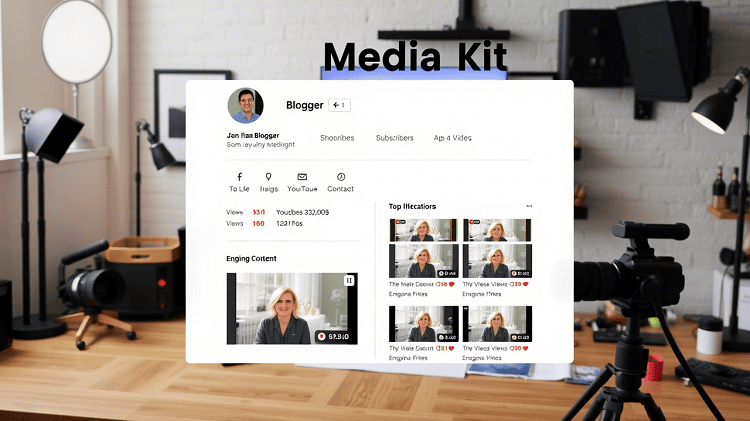
When brands start approaching you with collaboration proposals—whether you're a blogger, YouTube creator, or photographer—it's a signal: time to assemble your media kit. Even if these inquiries are still limited, their growth indicates that your audience is attracting advertiser attention.
Marketers may propose different interaction formats: from barter arrangements and affiliate programs to paid collaborations or brand ambassadorships. However, to proceed to discussing terms, they'll require a media kit—a concise "portfolio" that demonstrates your value proposition to brands. The following sections will break down how to create an effective media kit that distinguishes you among other creators.
Media Kit: Definition and Purpose
A media kit is a presentation of your personal brand and a catalog of advertising opportunities you offer to partners. Simply put: a document containing everything a brand needs to know about your blog, social channels, or project before initiating collaboration.
For bloggers and creators, a media kit serves two primary functions:
Informational – showcases statistics, experience, achievements, and pricing structures.
Brand positioning – conveys the visual style and atmosphere of your content through design, photography, and work samples.
This document is often called a "brand presentation" or "visual resume." It combines analytical data with creative elements to demonstrate what sets you apart from other creators.
Essential Media Kit Components
To ensure your media kit provides value to brands, include these core sections:
Foundational Elements: 1-2 paragraphs about yourself and your project, high-quality photography, audience geography or your location (if relevant).
Performance Analytics: Reach metrics, subscriber counts, engagement rates, and other key data points.
Collaboration Examples: Links to successful brand partnerships—screenshots, posts, case studies. Formats you offer: reviews, integrations, ambassadorships.
Pre-submission Checklist:
- Data accuracy verification
- Content freshness—regularly update figures and photography
- Design consistency—maintain brand aesthetics while avoiding visual overload
Your media kit should not exceed 1-2 pages. If you want to include additional details, create separate documents, such as:
Rate Sheet – advertising pricing + terms, including placement timelines.
Portfolio – completed project showcases.
Infographics – for detailed audience demographics and analytics breakdowns.
Ready-made templates are available in graphic design platforms like Canva and Adobe Express, or presentation builders. The key is selecting a format that's easily editable and expandable with your statistics and visual content.

Media Kit Content Strategy
Creating a media kit may seem complex: it's important not to get lost in details while ensuring nothing essential is omitted. To simplify this process, we've compiled key elements that will make your document compelling for brands. Even if you're a beginner, these insights will help structure information without unnecessary stress.
About You Section
This section serves as your business card. The primary objective is to explain to brands in 2-3 sentences why they should collaborate specifically with you. Don't list facts—showcase your uniqueness.

What to Include:
Content Focus – what you create/film and for whom. For example, "I help parents choose eco-friendly products through honest reviews."
Your Expertise – what distinguishes you from others. Experience, awards, unique approaches.
Mission or Philosophy – if your blog has a message for the audience, such as "Promoting conscious consumption through lifestyle content."
If you haven't defined your niche yet, answer this question: "What will brands remember about me after reading this?" Avoid generic phrases like "writing about life"—better: "sharing remote work life hacks in short-form video content."
Analytics and Audience Demographics
Brands need not only to be inspired by your content but also to verify that your audience aligns with their target demographic. For example, a swimwear company is unlikely to partner with a creator whose audience is 80% male.
What to Include in Your Media Kit:
Core Metrics: Subscriber count, reach, engagement—likes, comments, saves, views.
Audience Demographics: Gender, age, geography, interests.
Presentation Strategy:
Add screenshots from social media analytics dashboards—this increases credibility.
Emphasize platforms where your influence is strongest. For example, if you have 50 TikTok followers but 15,000 YouTube subscribers, don't mention TikTok.
If numbers are modest, focus on growth dynamics: "TikTok audience grows 30% monthly" or "Newsletter subscribers double every 2 months."
Services and Collaboration Formats
Brands want to understand exactly how you can provide value. Clearly specify what services you offer and which formats you work in. This reduces negotiation time and demonstrates your professionalism.
Service Examples:
Video Creation – Reels, reviews, Shorts, or YouTube content.
Content Writing – blog articles or Telegram channel posts.
Podcast Promotion opportunities.
What to Emphasize:
Niche Expertise – this builds trust.
Unique Skills – such as video editing, 3D graphics work, bilingual copywriting.
Don't try to cover everything. Better to detail 3-4 key areas where you're strongest than list dozens of services without examples.
Work Samples
Words persuade, but examples prove. This section should answer the brand's question: "How will your content look in collaboration with us?"
What to Include:
Past Partnership Case Studies – post screenshots, review links, integration videos.
Brand-Relevant Work: For example, if pitching to hotels, showcase travel content examples.
Achievements – like sales growth after your review, viral post performance, partner testimonials.
Formatting Guidelines:
Use links or QR codes for material access.
Add brief explanations: "Review for Brand X increased their website traffic by 40% over one month."
Customize this section for specific brands. A universal media kit is your foundation, but for high-priority clients, add pages with niche-relevant examples. Don't overload: 3-5 strong case studies beat 20 random projects. Update regularly, removing outdated examples.
Media kits aren't static documents. Create 2-3 versions for different brand types—local companies versus international corporations—to streamline your pitching process.

Experience and Media Mentions
Brands want proof of your expertise. This section provides an opportunity to show you've already collaborated with other companies and achieved results.
What to Include:
Partner Logos – visual list of brands you've worked with.
Client Testimonials – quotes with appreciation or assessment of your contribution.
Media Publications – links to articles, interviews, podcast mentions.
Section Enhancement:
Add case studies—describe 1-2 projects with metrics: "Partnership with Brand X increased their sales by 25% over the quarter."
Specify work scope: for example, "Created 9 Instagram Stories with integrations over 3 months, 1 YouTube video, and 1 Reel."
Examples:
"My cosmetics review for Y made it into recommendations and attracted 7,000 website visits for the brand."
"Collaboration with Z was featured in Cosmopolitan magazine as an example of successful partnership."
If you have limited experience, emphasize personal achievements—like audience growth after your challenge or winning a blogger competition.
Pricing Strategy
Should you include fixed prices in your media kit? The decision is yours. Some creators prefer listing rates, others discuss budgets per project. Both approaches have advantages:
Fixed Pricing works for standard services like Instagram posts or YouTube reviews, plus saves negotiation time with smaller brands.
Custom Pricing suits complex collaborations, ambassadorships, and long-term projects. Allows consideration of brand specifics: campaign scale, exclusivity, timelines.
Create a separate rate sheet with baseline prices, but clarify that final amounts depend on project requirements. If brands request pricing before receiving your media kit, attach the pricing page to your response.
Influencer marketing pricing is flexible. New creators benefit from starting with lower budgets but requiring brand account mentions. Experienced bloggers can increase rates through expertise and engaged audiences.
Contact Information
Your media kit is useless if brands don't understand how to reach you. Even the most impressive case study won't work if contact details get lost in correspondence.
What to Include:
Email for official inquiries.
Active Social Channels – Instagram, Telegram, TikTok, YouTube.
Phone Number – only if you're prepared for calls or messenger communication.
Dedicated Website Page with contact forms.
Verify all links lead to current profiles. Add buttons or QR codes in digital media kit versions. If sending PDF documents, create clickable hyperlinks.
Contact information should be duplicated at the document's end—in case brands share your media kit with colleagues.
Rapid Media Kit Creation
The Bloggers.Tools service allows you to assemble a professional media kit in 5 minutes:
-
Register on the service, go to the "Media Kits" section, and click "Create."
-
Fill in basic information: name and 2-3 sentences about your niche and uniqueness.
-
Add social networks—YouTube, Instagram, TikTok, and others. Their statistics will update automatically through secure API connections.
-
Specify location and content categories, such as "beauty," "travel."
-
Save as draft or proceed directly to settings.
Additional Bloggers.Tools Media Kit Features:
Auto-Updates: Weekly service synchronization of subscriber and demographic data.
Customization – change background colors to match brand style, add short links.
Video Business Card – upload 30-second messages to advertisers.
Ad Formats and Pricing: Create sections with rates for Stories, reviews, integrations. Attach examples of successful collaborations with results.
Make your media kit accessible via link, PDF, or password protection. Disable unnecessary social network displays, such as inactive TikTok accounts.
Place your media kit in the Blogger.Tools personal dashboard to receive advertising proposals. Use built-in tools for deal management.
Don't overload your media kit—activate only features that align with your current objectives. Manually update pricing and case study sections as new collaborations develop.